

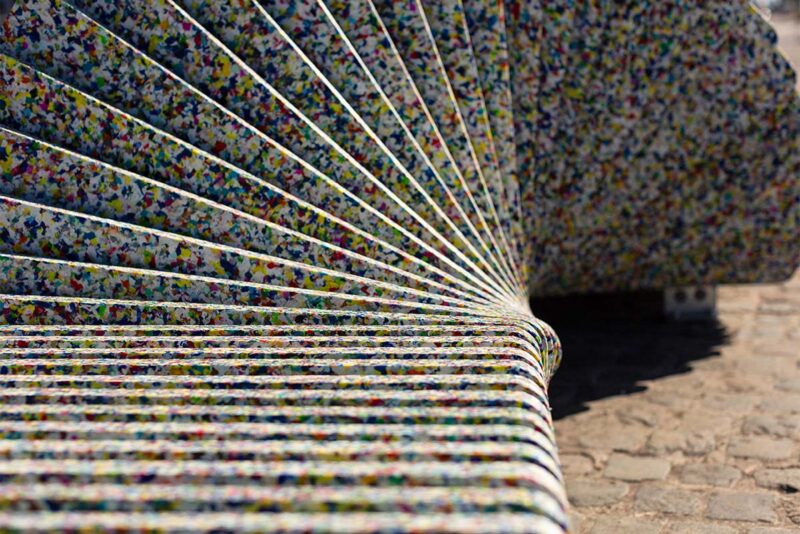
Public Art Curator Rina Whyte on how the Per Cent for Arts Scheme works in practice
For many schools, local authorities and public bodies, commissioning a public artwork under the Per Cent for Arts Scheme can feel a little like stepping into the unknown. But with the right support, the process becomes a chance to bring meaningful, thoughtful work into the spaces people use every day. Curator Rina Whyte has helped guide countless projects under the scheme — and she believes the process shouldn’t feel daunting.
“Yes, this is a central part of my work,” she says. “I support schools and organisations through every stage — from understanding the scheme, the drawing down or sourcing of funding to researching their site, participants and context to managing the commissioning process itself.”
Defining the vision
According to Rina, the first step is often about listening — and helping commissioning bodies articulate what they actually want from the work.
“I start by setting up a collaborative consultation process that includes all key stakeholders,” she explains. “During these conversations, I pay close attention to the details, even small comments or insights that might otherwise be overlooked. These often find their way into the project in subtle but significant ways, helping the process or the final work feel truly connected to the community it is for.”
In her experience, people often arrive with fixed ideas about what public art should be. But during the process, those ideas can start to shift.
“Often, when I first meet a school or commissioning body, they have strong preconceptions about public art,” she says. “Taking them through a well-structured commissioning process helps open up new ways of thinking and often results in outcomes they didn’t initially imagine.”
Broadening expectations and opening up possibilities
According to Rina, one of the most common challenges is that “the contribution of artists isn’t always fully understood or valued.” Some clients may instinctively lean toward functional pieces — benches, plaques, commemorative objects — simply because that’s what they’ve seen before. But part of the curator’s role is to gently expand the conversation.
“That’s where I come in — to help expand the conversation and show what’s possible when artists are invited to bring their creativity to a space,” she says.
And that creativity doesn’t have to be grand or flashy to be impactful. “Art in public spaces, regardless of the artform, has the ability to shift how we feel about our day, the places we live, work, or pass through. It can prompt reflection, spark conversation, or simply bring a sense of energy, excitement or wonder to everyday life. People often underestimate its sometimes quiet but powerful influence — and that’s something I always hope comes through projects or commissions I have worked on.”
Bridging perspectives: the role of the curator
Rina describes her job as a bit like matchmaking. “From beginning to end, I guide a tailored process that results in artworks which are specific to their site — whether that’s a permanent piece, a temporary installation, or a process-led project.”
That also means helping two different ways of thinking — artistic and institutional — meet in the middle. “Absolutely — that’s often an essential part of the process. Because the artist and commissioner can come from very different disciplines and ways of thinking, it’s important to bridge those perspectives and the best outcomes are formed from relationship building, making sure everyone feels heard and understood.”
Visuals play a key role in this. “Because I work in a visual discipline, I find that showing ideas through imagery or examples can often communicate far more effectively than words alone. It’s a way of aligning practical needs with artistic vision in a shared, tangible way.”
Keeping things clear and moving forward
Rina also helps manage some of the more practical challenges that arise — like timelines, budgets, and general understanding of how artists work.
“Common challenges include timelines, budget constraints, and supporting an understanding of Art as a profession,” she says. “I help by breaking the process down into manageable steps, clarifying expectations early on, and maintaining open communication throughout. My role is to keep things moving forward while ensuring the vision stays intact; that the commissioner, artist and community are respected in that process.”
Support from departments and funding bodies is a vital part of this. “It can make a big difference,” she adds, “especially when it comes to a clear, uncomplicated and timely payment process so that commissioning can happen seamlessly and artists are not delayed in getting payments.”
The value of thoughtful engagement
Not every public art project requires direct public input, but where it’s appropriate, engagement can add something truly special.
“Thoughtful, well-planned community engagement is a vital part of many projects — though it should always be tailored to fit the specific context and audience,” says Rina. “Artists I’ve worked with often excel in this area, and when communities are involved in the process, it can really deepen their connection to the artwork. It’s public art, after all — it makes sense that the public in some way has an input or understanding of its creation.”
Unexpected impact
“What I find most fulfilling is when a project leads to something more,” she reflects. “A new opportunity for the artist, a meaningful partnership, or when a school, local authority, or public body sees new potential in working with artists in their future.”
She’s seen that happen time and again: a project that started out as a one-off becomes the beginning of something more — more confidence in the process, more openness to collaboration, and often, a greater appreciation for what public art can offer.
Looking ahead
Rina remains energised about the future of public art in Ireland — and the role the Per Cent for Arts Scheme can play in shaping it.
“I’m excited by projects that invite deeper engagement but that also spark some joy — with place, with history, with communities,” she says. “I’d love to see more cross-disciplinary collaborations and more opportunities to fund artists of all ages, backgrounds and disciplines to take creative risks.”
“Public art in Ireland has so much potential,” she adds, “and I look forward to continuing to support its growth in thoughtful, imaginative and innovative ways.”