

Title of artwork: Illumination
Artist: Andrew Kearney
Year: 2002
Commissioner: Aisling Prior for Breaking Ground, Ballymun Regeneration Ltd
Funder:
Per Cent for Art Location: The Boiler House, Ballymun, Dublin
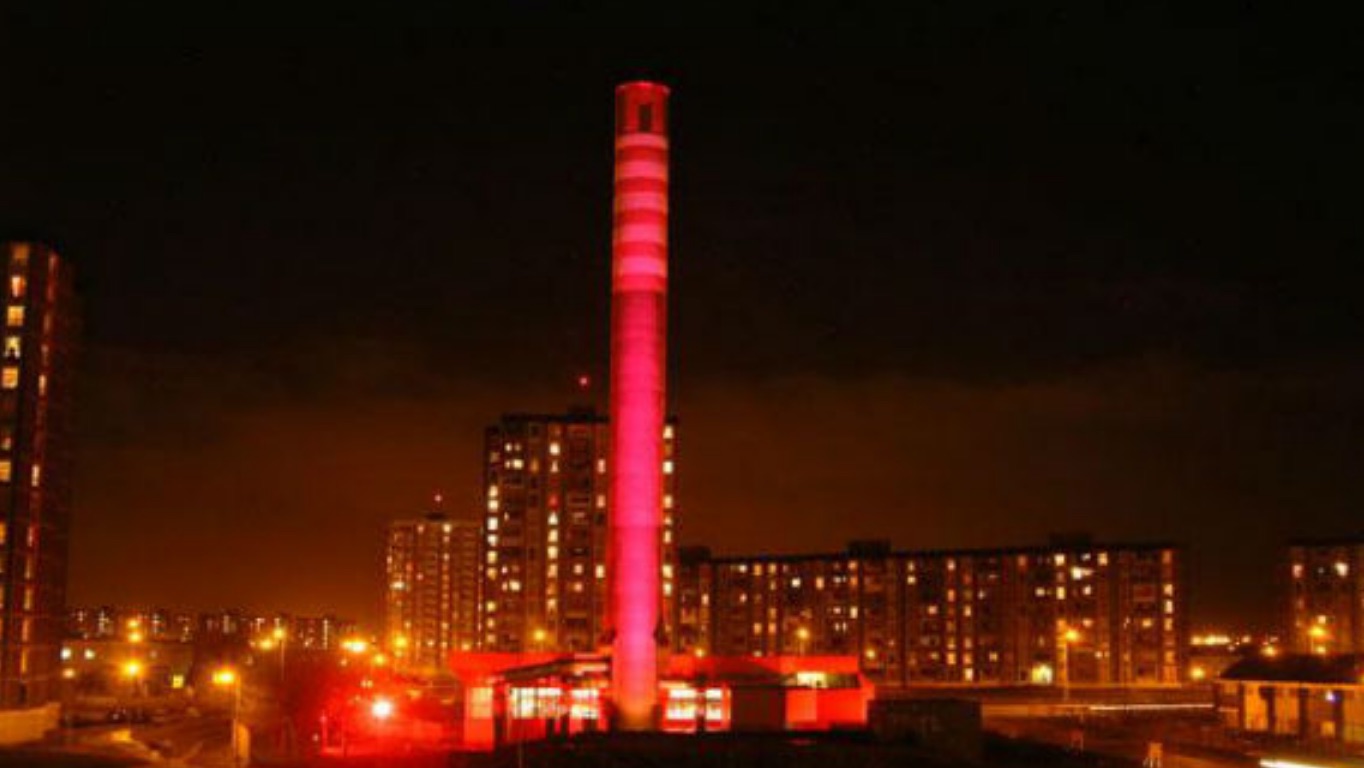
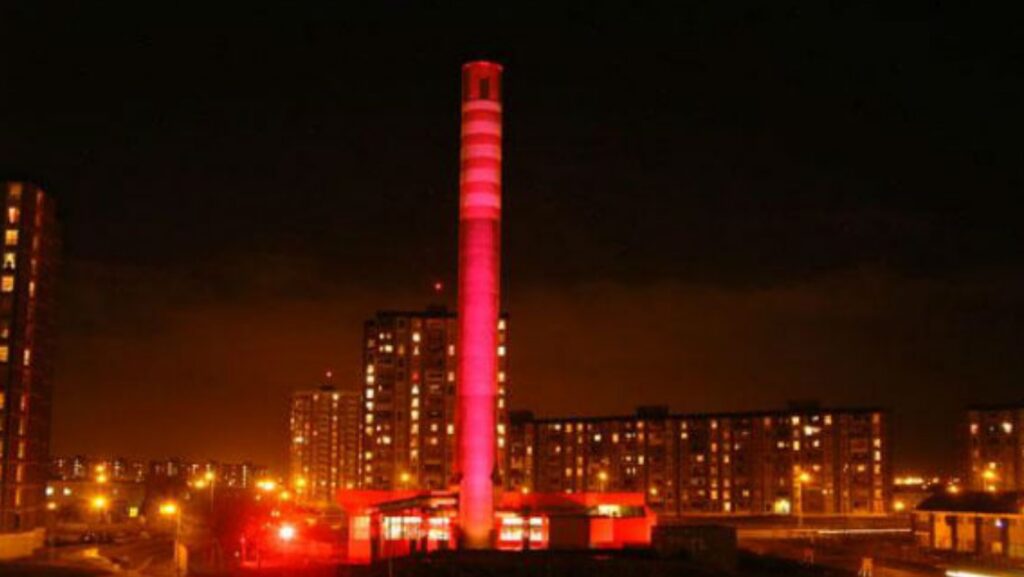
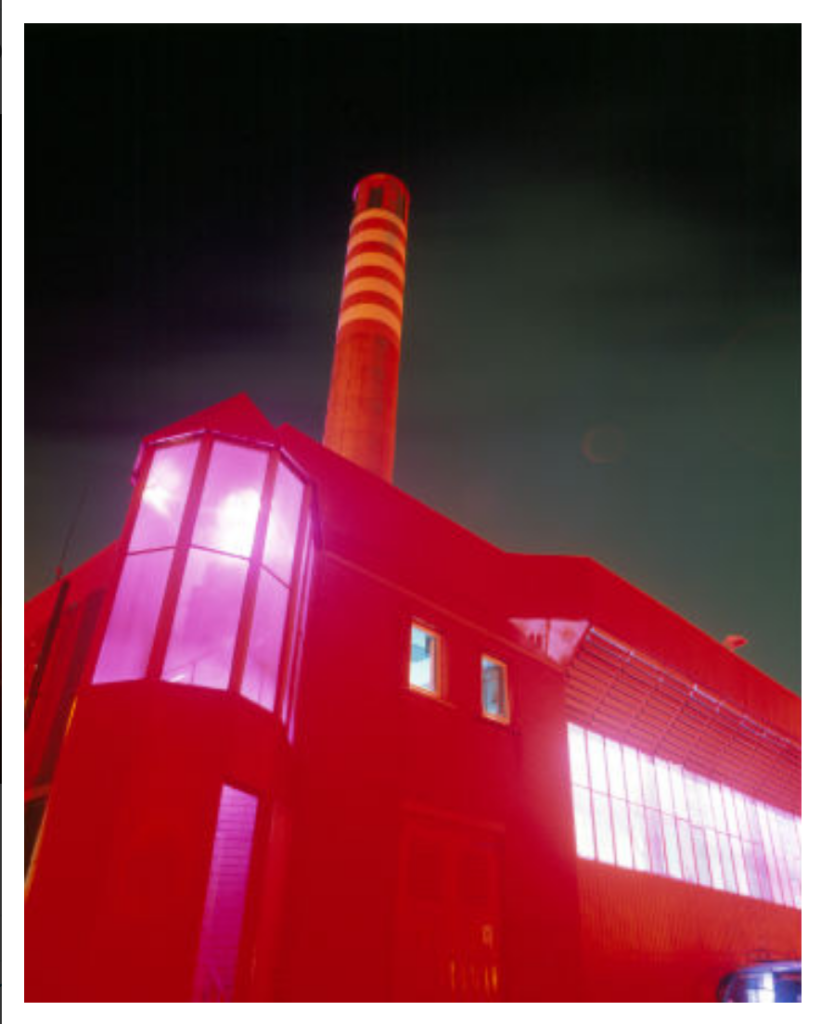
Playful shades of pink attract the eye, transforming the mundane into something fantastical. This was one of the goals behind Andrew Kearney’s Illumination, a series of lighting installations created to introduce the idea of new beginnings at the iconic Boiler House power plant in the heart of a Ballymun housing estate in Dublin.
Inspiration
The Breaking Ground project, a Per Cent for Art programme for Ballymun Regeneration Ltd., launched in February 2002 with Illumination as one of its strands. As the group behind a series of engaged, diverse and challenging public art projects in Ireland, Breaking Ground is an ambitious Local Authority art commissioning programme operating under the Per Cent for Art Scheme.
Artist and sculptor Andrew Kearney was commissioned by Breaking Ground to create a non-permanent installation to mark the beginning of the series of art commissions associated with the Ballymun Regeneration programme. On his research visits, Andrew was struck by the darkness of the area surrounding the Boiler House in the evening and night and proposed illuminating the area in a wash of pink light.
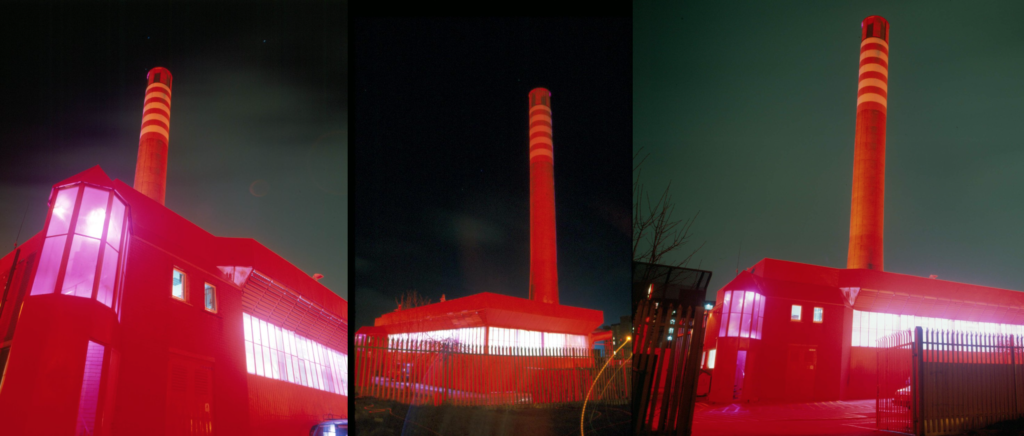
Illumination brings about a transformation of the familiar, without any of the physical structures of the building complex being altered. By playing with light in a whimsical way, Andrew encouraged spectators and audiences to reconsider their surroundings — and to reflect on the idea that elements that appear static or stable are in fact constantly changing.
Process
Illumination was first brought to life at a public ceremony on 14 February 2002, Valentine’s Day. Lighting techniques included low-tech red floodlighting, while a directional shaft of deep magenta spotlighting (at the base of the chimney) introduced a vertical strip to illuminate the building’s full height. A spotlit, motorised mirror ball was added to the internal spiral staircase — a surprisingly whimsical note for such a functional, utilitarian space with a defined role within the community.
Community collaboration
Local residents were a vital part of this project, and the wider Breaking Ground programme, from the start. A group of residents had played an important role in the drafting of the commissioning strategy and subsequent artists’ brief; they, along with members of the immediate neighbourhood, were invited to a solo exhibition by Andrew Kearney in Limerick City Gallery in January 2002.
Illumination started life as a low budget, temporary project, designed to operate for just a couple of months. Ultimately, the installation was so well regarded locally and by Boiler House staff that Breaking Ground maintained the work over seven years, timing it to turn on during the dark evenings of the winter months. When it was finally dismantled in 2009, residents reported regretting the loss of its warm pink glow.
About the artist
Andrew Kearney, a mixed media installation artist, was born in Limerick, Ireland in 1961. He studied Fine Art at the Limerick College of Art and Design, before obtaining an MA in sculpture at Chelsea College of Art and Design. He was awarded both the Barclays Young Artist award in the Serpentine Gallery London and a fellowship in the PS1 studios of contemporary art in New York in 1992. He has developed installations for the Douglas Hyde Gallery in Dublin, the Irish Museum of Modern Art, the Camden Arts Centre in London and the Ottawa Art Gallery in Canada; public art projects include Heathrow’s Terminal 1 Pier 4A. His work is not centered on materials or predefined forms, but rather on the specific location, the functions, and the networks associated with that place. This site-first approach allows his installations to blend with and transform their environmental or architectural context.