

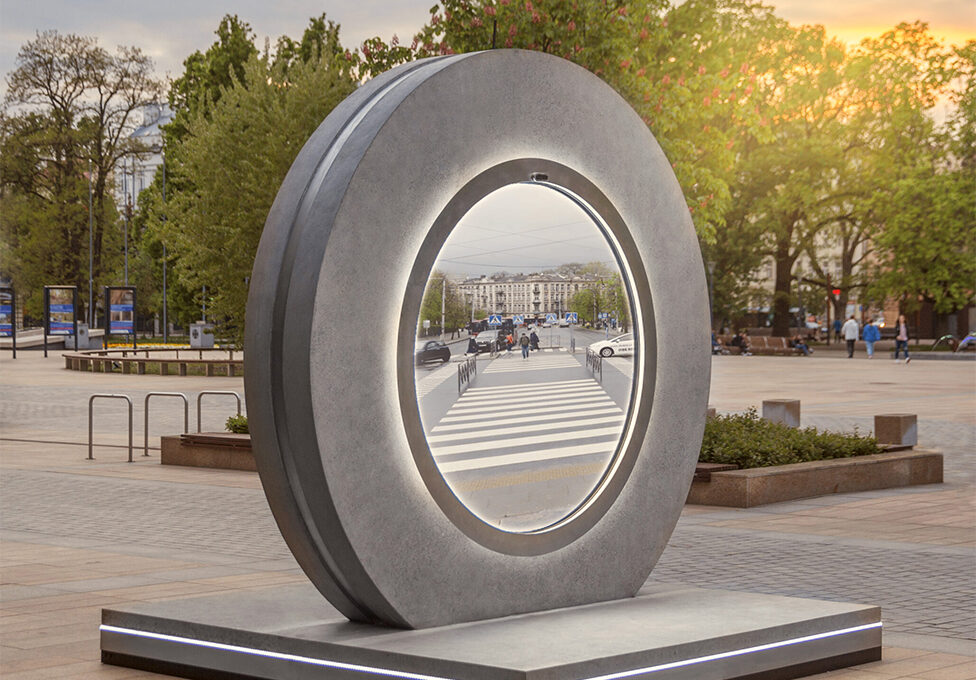
Since it opened in early May, the Portal art work has attracted around 25,000 onlookers per week to its Dublin location — numbers guaranteed to spark the envy of many cultural attractions. Created by artist Benediktas Gylys, the latest Portal visually links a location in Manhattan with a location in Dublin City Centre and is designed to create a sense of unity and interaction that transcends geographical barriers. Controversial activities by members of the public at both locations did pose challenges, but the team behind the art project believe that the “unscripted” nature of the piece is part of its unique appeal. We spoke to Nicolas Klaus, Head of Partnerships at Portals.org, about the Dublin/New York portal and the future of the initiative.
A growing network
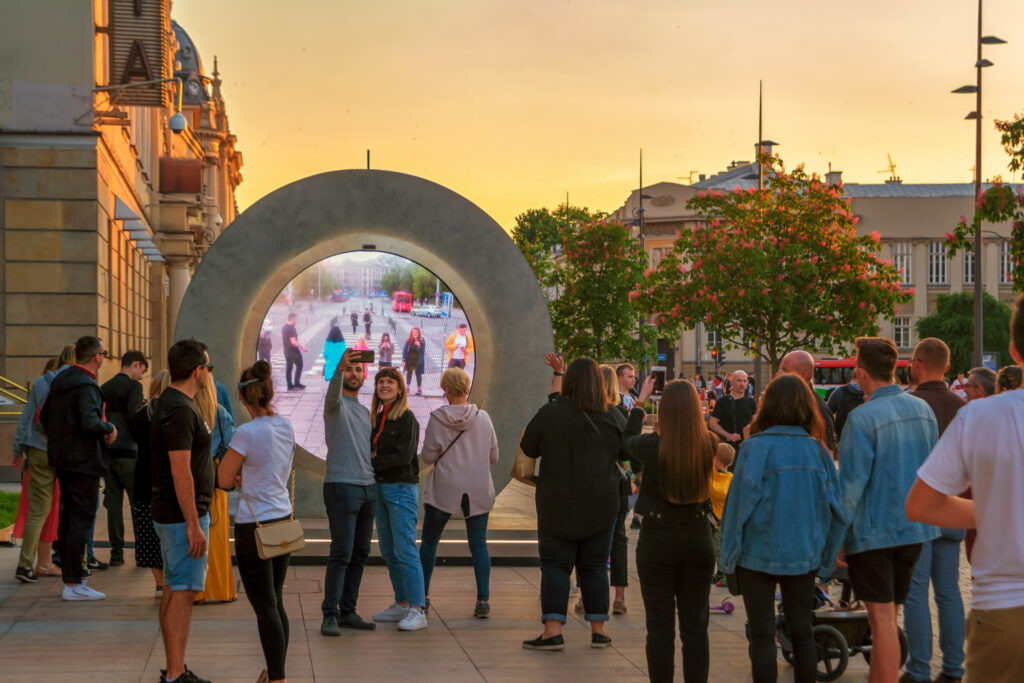
A linked pair of circular screens positioned in two busy public spaces, the Portal enables people in different cities to interact with each other in real time. An immersive experience intended to bridge the gap between distant communities, the first ever Portal artwork was established to link Vilnius in Lithuania with Lublin in Poland — but we may see more emerge soon.
“We have been contacted by hundreds of cities, organisations and individuals who are interested in joining the network of Portals,” notes Nicolas. “At the moment, our small team can only handle a small amount of projects and we are planning to build four new Portals later this year. One of them will be in the State of Piauí in Brazil, while the other locations will be announced soon.”
New cultural dynamics
Nicolas and the team are curious to see the different responses to the Portals as they emerge in new destinations around the world. “Humans are fundamentally much more alike than they are different; therefore, we see many similarities across different cultures and countries. For example, most people react in a very positive and curious way when meeting one another through the Portals. I believe everyone who gets to visit the Portals will have this experience: the atmosphere is extremely friendly and positive.”
It’s like they are a stage and everything noteworthy is significantly amplified by the press and social media.
Nicolas Klaus, Portals Head of Partnerships
One crucial factor that affects the vibe at a given location is the amount of visitors — with the volume at Dublin and New York particularly high. “With so many people, the Portal is not only an artwork, but it’s also an event that needs to be coordinated every day. It also means that some people might get a bit carried away by the experience and there is just a lot more attention on everything that happens around the Portals,” notes Nicolas. “It’s like they are a stage and everything noteworthy is significantly amplified by the press and on social media. I’m sure we will see many new flavours and interesting dynamics as we bring Portals to new cultures and continents.”
Challenges and adjustments
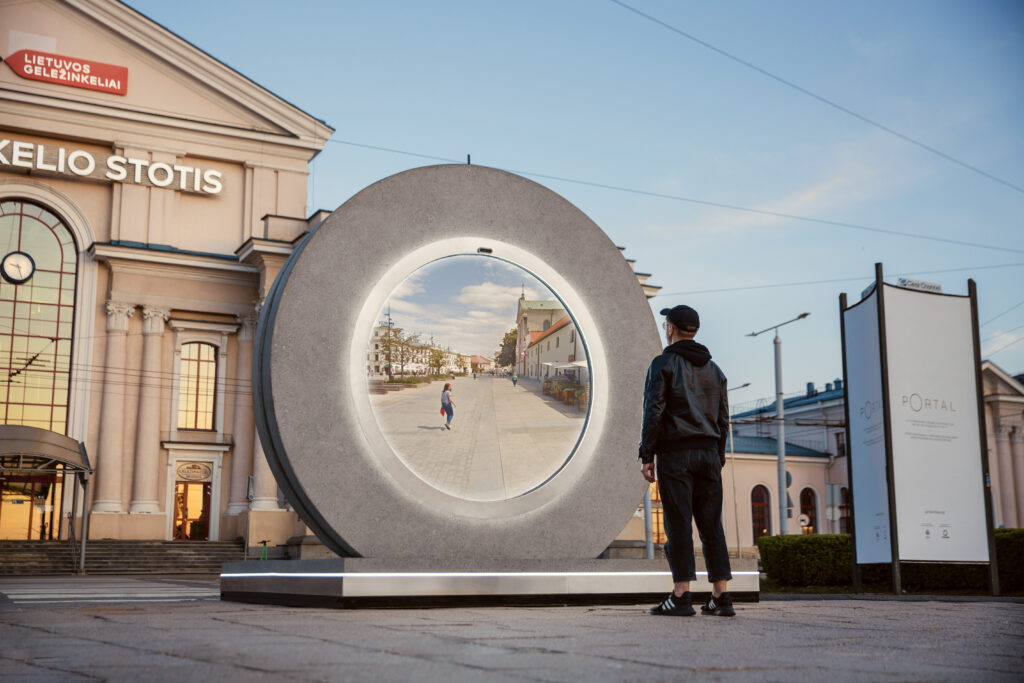
Integral to the experience of a public art work is the unpredictability of how onlookers might react. While the Dublin/New York Portal was forced to close for a small period of time because of some unruly behaviour, the Portals team has since taken measures to address this.
“We’ve implemented several upgrades, including a proximity-based solution that triggers a livestream blur if someone obstructs the camera. Additionally, we have limited the opening hours and there are on-site ambassadors who help with guiding visitors. This was necessary just because of the significant amount of people that are visiting the Portals — much more than what we experienced with the previous Portals in Lithuania and Poland. The atmosphere is very good and we are planning to expand both the opening hours and locations that the Dublin Portal will connect to going forward.”
The authenticity of good public art
With such large numbers visiting the Portal, Nicolas and his team always knew that there was a chance visitors would react in unusual ways. “We were not surprised by the small number of people who behaved inappropriately. What did come as a surprise was the substantial exposure on social media and in the press, which amplified a handful of events out of thousands of interactions. Ultimately, I believe this is all part of the artwork; the appeal of the project is that people see that it’s real, it’s not scripted. I would invite everyone to visit in person and get a feeling for the atmosphere at the Portals and with our fellow humans.”
For Nicolas and the Portals team, good public art is what moves people. “It provides new perspectives or challenges existing notions, without imposing certain interpretations but rather inviting viewers to explore and reflect.”
Follow @portals_org on Instagram for news on upcoming installations.